Quick Answer
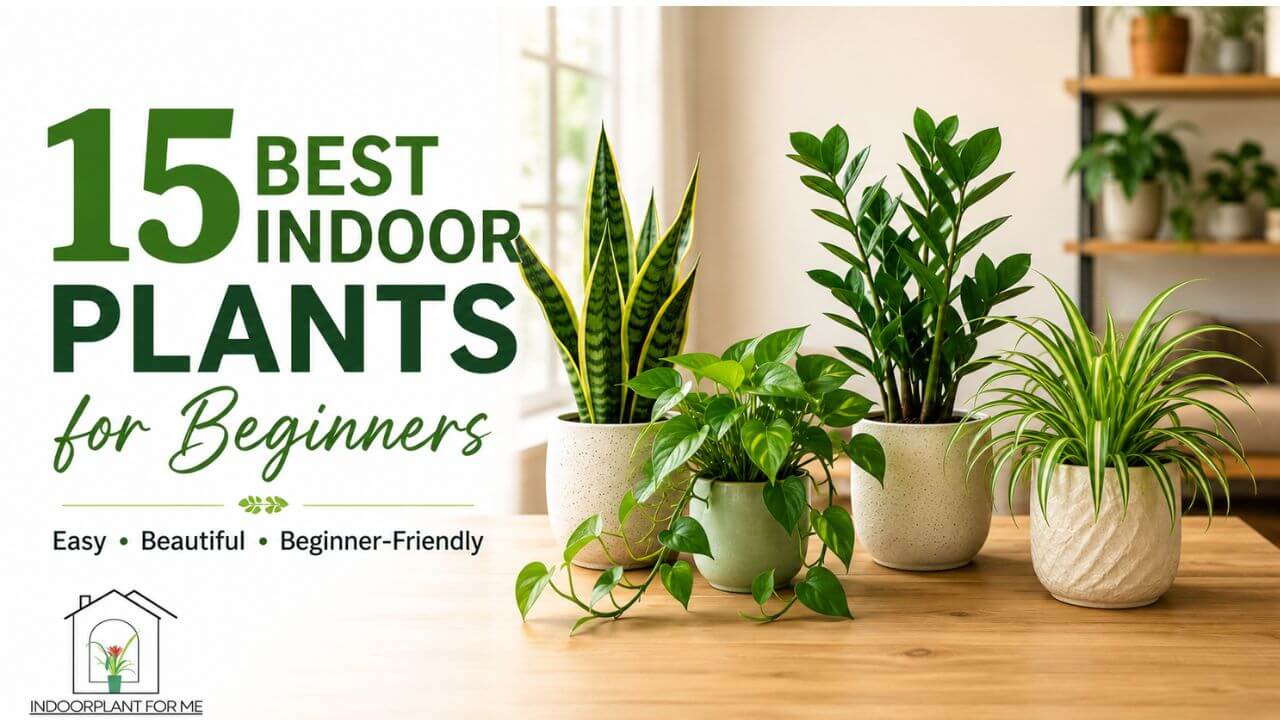
If you’re looking for the best indoor plants for beginners, start with plants that are forgiving, adaptable, and not too dramatic about care.
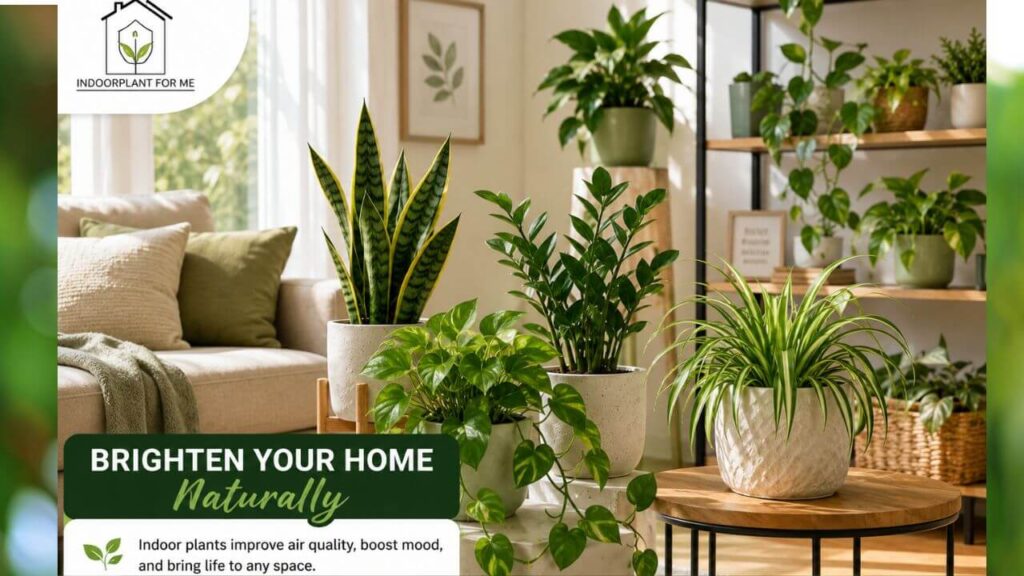
Snake Plant, ZZ Plant, Golden Pothos, Spider Plant, Chinese Evergreen, and Cast Iron Plant are some of the easiest houseplants to grow because they can handle the occasional missed watering, do fine in normal indoor conditions, and bounce back when you make a beginner mistake or two.
If this is your first houseplant, you do not need a magical green thumb. You just need the right plant.
Starting Your Indoor Plant Journey
Buying your first houseplant is exciting.
Maybe you’ve seen gorgeous rooms full of greenery on Pinterest, Instagram, or YouTube and thought, “Okay, I want my place to look like that.”
Or maybe you just want something alive and cheerful in your bedroom, office, or apartment that isn’t another throw pillow.
Then the panic kicks in.
“What if I kill it?” Yep. Very normal.
Almost every new plant parent thinks that at some point. The good news?
A lot of indoor plants are way tougher than they look.
Some of them are basically the plant version of that one friend who never seems stressed no matter what life throws at them.
The trick isn’t becoming a plant expert overnight. It’s choosing plants that fit your home, your schedule, and your level of patience.
In this guide, you’ll find beginner-friendly plants that are pretty, sturdy, and easy to live with.
You’ll also learn how to avoid the classic mistakes that make new plant owners swear off houseplants forever.
And just so you know: every plant lover started with one very first plant and at least one very questionable watering decision.
What Makes an Indoor Plant Beginner-Friendly?
Not every houseplant is beginner material.
Some plants are a little high-maintenance.
They want perfect humidity, exact watering, bright light, and probably a handwritten apology if you move them too much. Beautiful?
Absolutely. Easy? Not always.
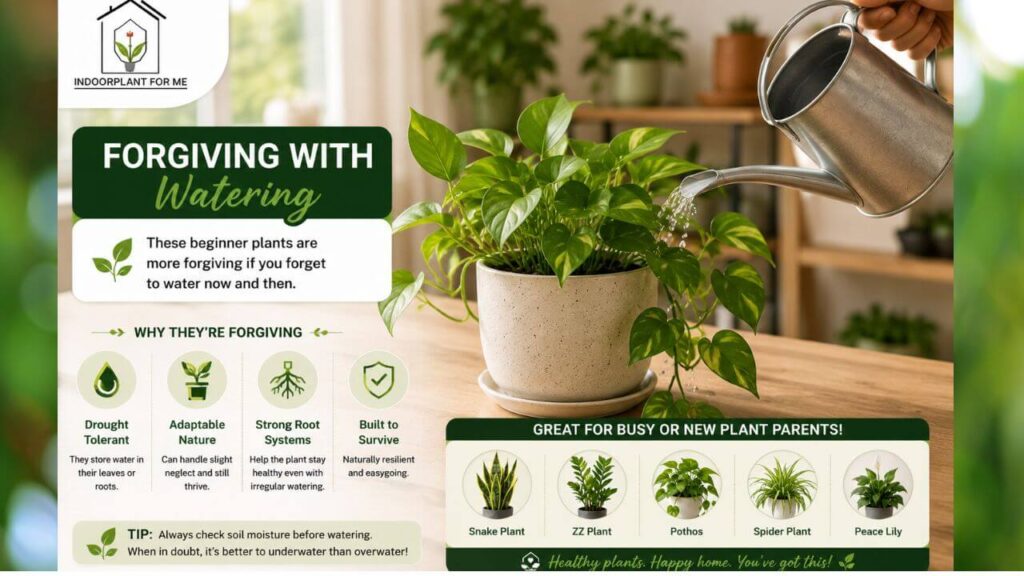
Beginner-friendly indoor plants usually have a few things in common:
- They can handle the occasional missed watering.
- They grow well in normal indoor temperatures.
- They adapt to different light conditions.
- They resist many common pests.
- They recover well from small mistakes.
- They don’t need constant attention like a needy houseguest.
That makes the whole plant-parent thing a lot less stressful.
Beginner’s Corner
Here’s a lesson many plant owners learn the hard way:
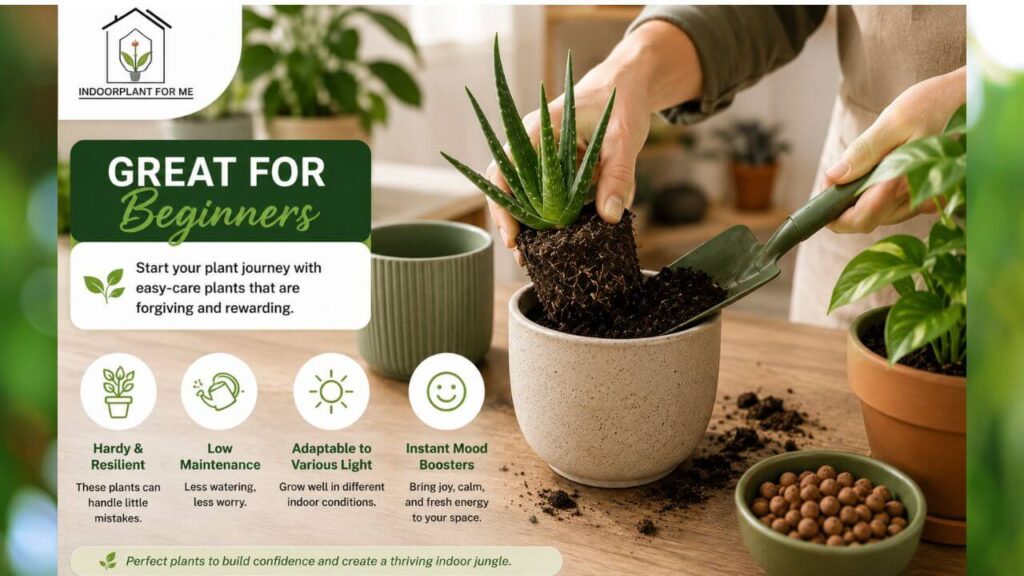
It’s usually easier to pick a plant that fits your home than to turn your home into a spa retreat for a picky plant.
If your apartment doesn’t get much sunlight, choose plants that naturally do well in lower light.
Don’t try to force a sun-loving plant to survive in a dark corner and then act surprised when it looks offended.
Before Buying Your First Houseplant
Before you head to the garden center or click “add to cart” at 11:47 p.m., ask yourself a few simple questions.
How much natural light does your home receive?
Take a look at your windows during the day.
- South-facing windows usually get the most sunlight.
- East-facing windows give gentle morning sun.
- West-facing windows get stronger afternoon sun.
- North-facing windows usually get the least direct light.
Knowing your light situation helps you choose a plant that won’t spend its life silently struggling in the wrong spot.
Do you travel often?
If you’re away on weekends or travel for work, go for drought-tolerant plants like Snake Plants or ZZ Plants.
These plants are very understanding. They won’t hold a grudge if you miss watering day.
Do you have pets?
A lot of popular houseplants are toxic to cats and dogs.
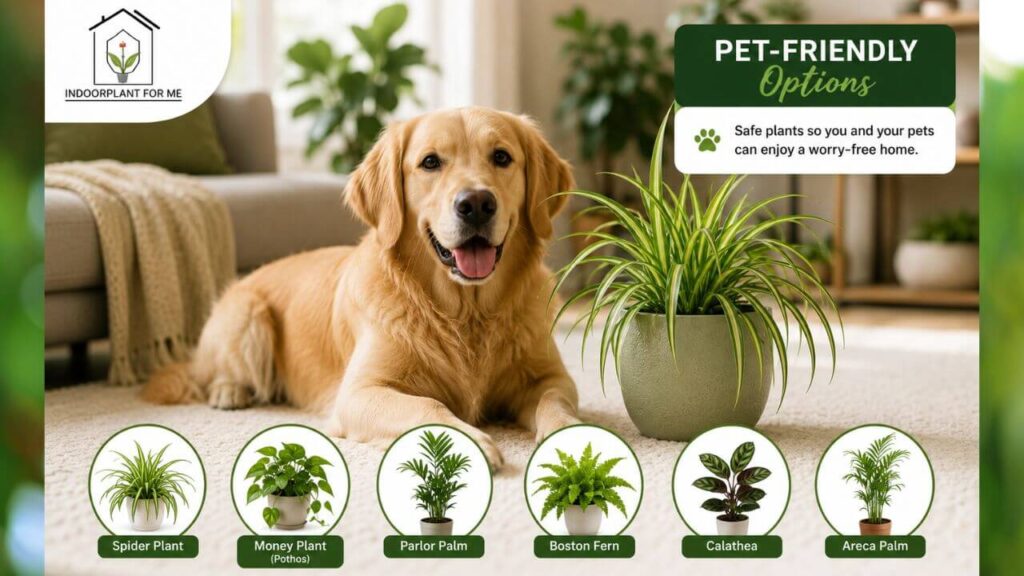
If you have curious pets, choose pet-safe plants or keep toxic ones well out of reach.
Because as much as we love our plants, we also love our pets more than the couch they may or may not be chewing on.
We’ll cover pet-friendly indoor plants in a separate guide later.
How much time can you realistically give a plant?
Be honest here.
Some people enjoy checking their plants every day like they’re tiny leafy roommates.
Others want a plant that looks nice and mostly minds its own business.
Both are fine.
The best indoor plant is the one that fits your actual life, not your fantasy life where you suddenly become a person who mist-sprays ferns at sunrise.
1. Snake Plant (Dracaena trifasciata)
Beginner Confidence Rating: ⭐⭐⭐⭐⭐
Why We Recommend It
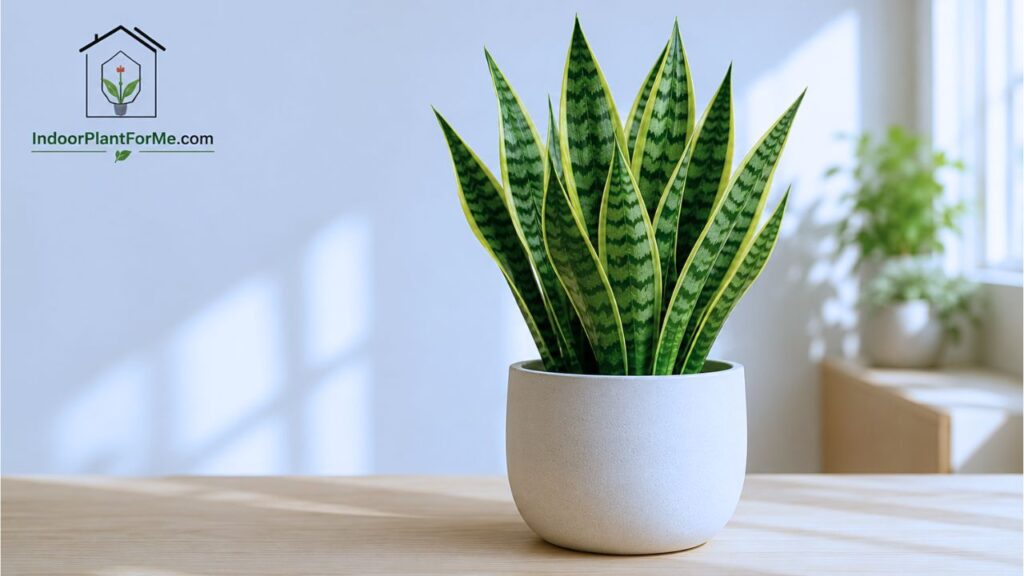
If I could hand one plant to every beginner and say, “Start here,” the Snake Plant would be at the top of the list.
Its tall, upright leaves look sleek and modern, and it has a reputation for surviving conditions that would make other plants throw in the towel.
This is one of the most forgiving houseplants you can own.
Quick Care Card
| Feature | Recommendation |
| Difficulty | Very Easy |
| Light | Low to Bright Indirect Light |
| Water | Every 2–4 weeks (after soil dries completely) |
| Humidity | Average household humidity |
| Growth Speed | Slow to Moderate |
| Pet Safe | No |
| Best Room | Living room, office, bedroom |
Why It’s Perfect for Beginners
Snake Plants store water in their thick leaves, which is a fancy way of saying they are very good at handling a little neglect.
Forget to water it for a bit? It will probably be fine.
Water it too often? That’s where the trouble starts.
A lot of first-time plant owners are shocked to learn that with Snake Plants, less watering is usually better than more watering. Wild, right?
Light Requirements
Snake Plants are wonderfully flexible.
They grow best in bright, indirect light, but they can also handle lower-light rooms without making a big scene about it.
Try to avoid harsh afternoon sun, especially in summer, because too much direct light can scorch the leaves. And nobody wants a sunburned plant.
Watering
Let the soil dry out completely before watering again.
A simple trick is to stick your finger about 2 inches (5 cm) into the soil. If it still feels damp, give it a few more days.
This one habit can save you from one of the biggest indoor plant problems: root rot.
Root rot is basically the plant version of “I was fine until I wasn’t.”
Common Beginner Mistake
A lot of beginners water every Sunday just because Sunday feels like watering day.
Plants do not care what day it is.
They care about the soil, the light, and the temperature.
So instead of watering by the calendar, check the soil first. Your plant will appreciate the extra thought.
Seasonal Care
In Spring
New growth usually starts to show up.
This is a great time to repot if the roots are getting crowded.
Summer
Your plant may dry out a little faster in warmer weather.
Still, always check the soil before watering.
In Fall
Growth slows down a bit.
You can ease up on fertilizer.
In Winter
Snake Plants usually need much less water in winter because shorter days slow everything down.
If your home gets very warm from heating, keep the plant away from vents so the leaves don’t dry out like a forgotten bag of chips.
Signs Your Snake Plant Is Happy
A healthy Snake Plant usually has:
- Firm, upright leaves
- Bright green color
- Slow but steady new growth
- No soft or mushy stems
Signs Something Is Wrong
Yellow leaves, soft stems, or a bad smell coming from the soil usually mean the plant has been overwatered.
Wrinkled leaves can mean it has gone too long without water.
The good news? Snake Plants are pretty forgiving and often bounce back if you catch the problem early.
Pro Tip
Use a pot with drainage holes.
Even the toughest indoor plants struggle when extra water has nowhere to go.
If you love decorative pots, keep the plant in a plastic nursery pot with drainage holes and place that inside the prettier container.
Best of both worlds: style and survival.
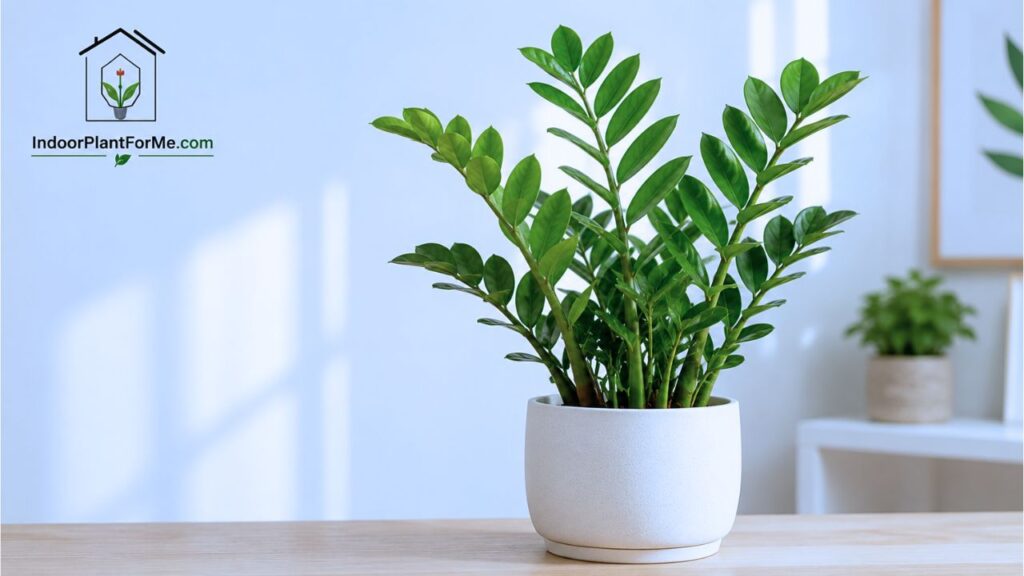
2. ZZ Plant (Zamioculcas zamiifolia)
Beginner Confidence Rating: ⭐⭐⭐⭐⭐
If you’ve ever wanted a houseplant that basically minds its own business, the ZZ Plant is a fantastic choice.
It has shiny, deep green leaves and neat upright stems, so it looks polished without asking for much in return.
And for beginners, that’s a dream. Forget to water it once in a while? The ZZ Plant will not make a scene.
Quick Care Card
| Feature | Recommendation |
| Difficulty | Very Easy |
| Light | Low to Bright Indirect Light |
| Water | Every 2–4 weeks (allow soil to dry first) |
| Humidity | Average household humidity |
| Growth Speed | Slow to Moderate |
| Pet Safe | No |
| Best Room | Office, Living Room, Bedroom |
Why It’s Perfect for Beginners
The ZZ Plant stores water in thick underground rhizomes, which are basically its little backup water tanks.
So if you forget to water it for a bit, it usually just shrugs and keeps going.
That makes it a great plant for busy people, students, or anyone who travels a lot and doesn’t want to come home to a dramatic plant meltdown.
Light Requirements
One of the best things about ZZ Plants is how flexible they are.
They do well in:
- Bright indirect light
- Medium light
- Low-light rooms
If you give it brighter indirect light, it will usually grow a little faster and look fuller.
But if your room is on the dim side, it can still hang in there.
Just don’t put it in harsh direct afternoon sun unless you want crispy leaves and regret.
Watering
When you water a ZZ Plant, give it a good soak until water runs out of the drainage holes.
Then let the soil dry out almost completely before watering again.
A simple rule of thumb:
- Spring & Summer: Every 2–3 weeks
- Fall: Every 3 weeks
- Winter: Every 3–5 weeks
Of course, your home may have its own personality. Warm rooms, dry air, and brighter light can all make the soil dry faster.
Common Beginner Mistake
Treating a ZZ Plant like it’s a fern that wants constant moisture.
A lot of beginners assume every houseplant likes damp soil all the time.
ZZ Plants absolutely do not.
They’d much rather dry out between waterings than sit in soggy soil and complain about it later.
Seasonal Tip
In winter, your ZZ Plant may seem like it has gone into hibernation.
That’s normal.
It’s not being lazy. It’s just slowing down because there’s less light.
When spring rolls around and the days get longer, you’ll usually see fresh new shoots pop up again, as if nothing happened.
Signs Your ZZ Plant Is Healthy
Look for:
- Thick, glossy leaves
- Firm stems
- Bright green new growth
- Upright posture
Warning Signs
Yellow stems and soggy soil usually mean the plant is getting too much water.
Brown, crispy leaf tips can happen if the air is very dry or if watering has been inconsistent.
Pro Tip
The shiny leaves can collect dust over time, and dusty leaves are not exactly living their best life.
Every month or so, wipe them gently with a damp microfiber cloth.
It keeps the plant looking fresh and helps it soak up light better too.
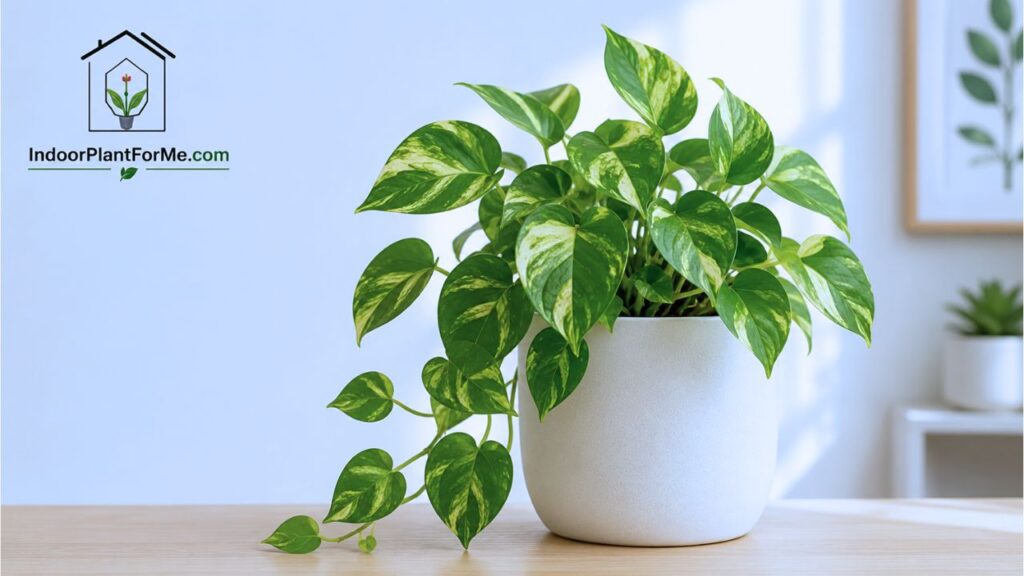
3. Golden Pothos (Epipremnum aureum)
Beginner Confidence Rating: ⭐⭐⭐⭐⭐
Golden Pothos is one of those plants that seems to get along with everybody.
It’s easygoing, fast-growing, and looks great almost anywhere.
Its trailing vines make it perfect for shelves, hanging baskets, bookcases, or anywhere you want a little greenery without a lot of fuss.
A lot of plant lovers will tell you this was the first plant that made them think, “Hey… maybe I can actually do this.”
Quick Care Card
| Feature | Recommendation |
| Difficulty | Very Easy |
| Light | Medium to Bright Indirect Light |
| Water | When the top 1–2 inches (2.5–5 cm) of soil are dry |
| Humidity | Average household humidity |
| Growth Speed | Fast |
| Pet Safe | No |
| Best Room | Living Room, Kitchen, Home Office |
Why It’s Perfect for Beginners
Golden Pothos is pretty good at telling you when it needs something.
If it’s thirsty, the leaves may droop a little.
After watering, it usually perks back up pretty quickly, which is very encouraging when you’re still learning the ropes.
That kind of feedback is super helpful for beginners because it takes some of the guesswork out of plant care.
Light Requirements
Golden Pothos is wonderfully adaptable.
It grows best in bright, indirect light, where it tends to look fuller and show off its pretty variegation.
But it can also handle medium light without throwing a fit.
If you put it in a darker spot, it will probably survive, but growth may slow down and the leaf patterns may become less noticeable.
Watering
Golden Pothos likes soil that stays lightly moist, but not soggy.
Instead of watering on a strict schedule, just check the top layer of soil.
If the top inch or two feels dry, it’s usually time to water.
If it still feels damp, give it a little more time. No need to rush it.
Beginner’s Corner
One of the easiest ways to learn your plant’s needs is to simply pay attention to how it looks and feels.
Healthy Pothos leaves feel firm.
When the plant gets thirsty, the leaves may soften a bit and droop slightly.
Noticing those little changes is one of the best skills you can build as a new plant parent.
Common Beginner Mistake
Putting it in a dark corner because someone said it’s a “low-light plant.”
Yes, it can tolerate lower light.
No, that doesn’t mean it wants to live in a cave.
It really does best with bright, filtered daylight.
Seasonal Care
In Spring
Trim long vines if you want a fuller plant.
And if you snip healthy cuttings, you can root them in water and make new plants. Very satisfying. Slightly addictive, honestly.
In Summer
Growth usually speeds up.
Check the soil more often, especially if your home gets a lot of sun.
In all
Ease up on fertilizer.
The plant is starting to slow down, so it doesn’t need as much extra help.
In Winter
Growth naturally slows.
You may notice it needs less water than it did in summer, and that’s completely normal.
Signs Your Pothos Is Healthy
- Bright green leaves
- Long trailing vines
- New leaves unfolding regularly
- Firm stems
Signs Something Needs Attention
Yellow leaves often point to overwatering.
Brown, crispy edges can mean underwatering or very dry indoor air.
If the plant starts looking long and stretched out, it probably wants more light.
Pro Tip
Rotate your Pothos about a quarter turn every week or two.
That helps it grow evenly instead of leaning hard toward one light source like it’s trying to eavesdrop on the neighbors.
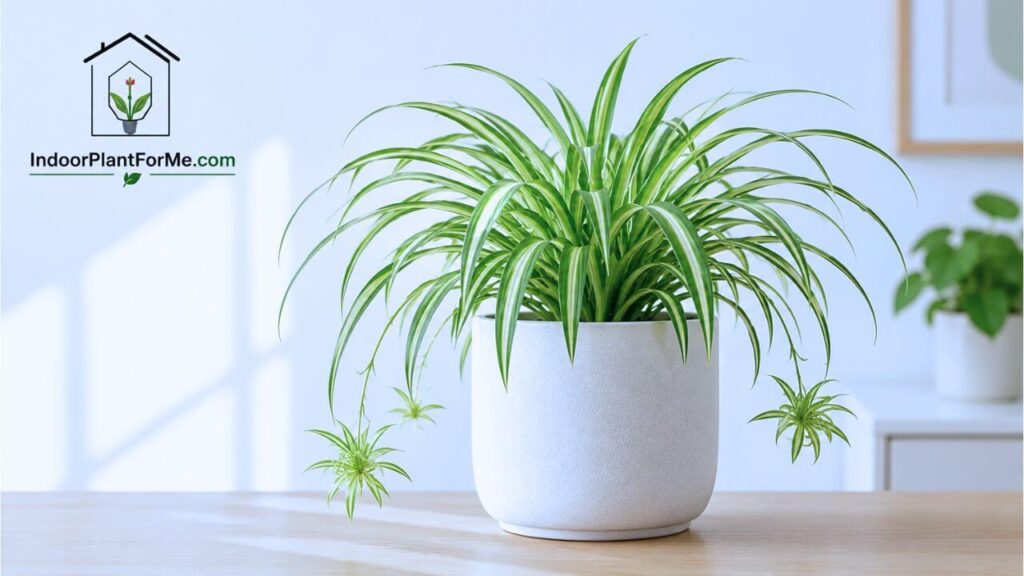
4. Spider Plant (Chlorophytum comosum)
Beginner Confidence Rating: ⭐⭐⭐⭐☆
Spider Plants have been a favorite in American homes for decades, and honestly, it makes sense.
They’re cheerful, adaptable, and fun to grow.
Once they mature, they send out long stems with tiny baby plants, often called “spiderettes,” which is basically the plant version of giving you bonus content.
And yes, those babies are easy to propagate, which makes Spider Plants extra rewarding for beginners.
Quick Care Card
| Feature | Recommendation |
| Difficulty | Easy |
| Light | Bright, Indirect Light |
| Water | Keep lightly moist; allow the top inch of soil to dry |
| Humidity | Average to Moderate |
| Growth Speed | Moderate to Fast |
| Pet Safe | Yes |
| Best Room | Living Room, Bathroom, Kitchen |
Why It’s Perfect for Beginners
Spider Plants are pretty forgiving.
Forget a watering day?
They usually bounce back.
Have pets that like to investigate everything?
Spider Plants are considered non-toxic, which makes them a popular pick for cat and dog owners.
They’re basically the friendly neighbor of the houseplant world.
Light Requirements
Spider Plants like bright, indirect light best.
That said, they can also handle medium light pretty well, which makes them flexible for a lot of homes.
Just keep them out of strong direct afternoon sun, because that can leave brown patches on the leaves.
Watering
Spider Plants like soil that stays lightly moist, but they do not want wet roots sitting around all day.
Let the top inch of soil dry out before watering again.
If you’re unsure, it’s usually safer to wait one more day than to water too soon.
Common Beginner Mistake
Using tap water with a lot of minerals or fluoride.
Some Spider Plants get brown leaf tips because of what’s in the water, not because you’ve done anything terribly wrong.
If that happens, try filtered, distilled, or rainwater now and then.
Seasonal Tip
During spring and summer, Spider Plants often produce lots of baby plants.
If the plant starts looking crowded, you can trim the runners after flowering.
If you want more plants, root the babies in water or plant them directly into moist potting mix.
It’s basically plant multiplication, and it’s weirdly fun.
Signs Your Spider Plant Is Healthy
- Bright green or variegated leaves
- Upright growth
- New baby plants appearing
- Firm, healthy roots
Pro Tip
Don’t panic over a few brown leaf tips.
They’re very common and don’t automatically mean your plant is in trouble.
Try to look at the plant as a whole instead of chasing perfection leaf by leaf.
A Spider Plant doesn’t need to be flawless to be beautiful.
3. Golden Pothos
Beginner Confidence Rating: ⭐⭐⭐⭐⭐
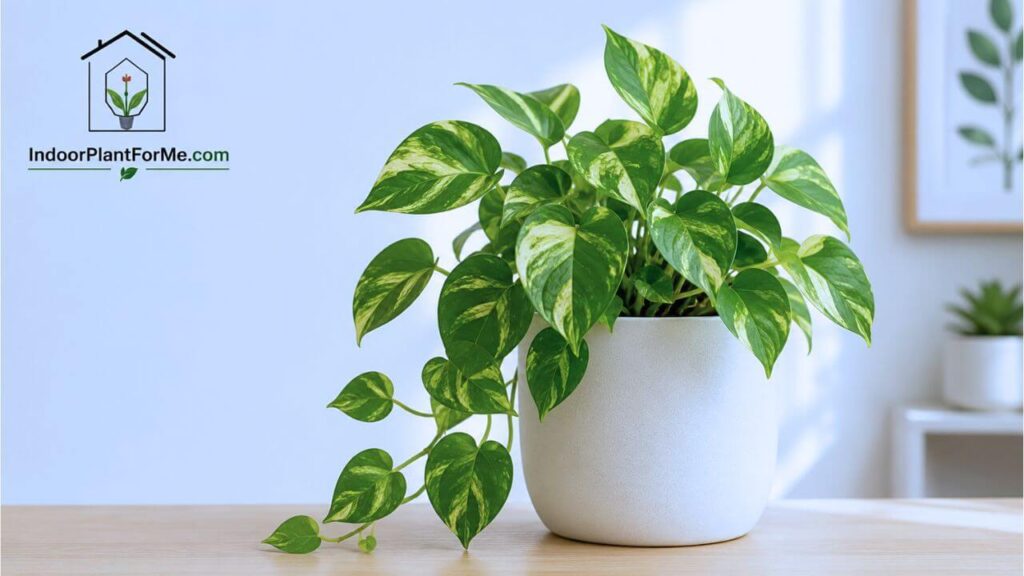
Golden pothos is one of the easiest trailing plants you can grow, and honestly, it is kind of a show-off in the best way.
Its heart-shaped leaves look great on shelves, in hanging baskets, or spilling over the side of a bookcase like it owns the place.
Why beginners love it
- Grows quickly.
- Easy to propagate from cuttings.
- Adapts to lots of different lighting conditions.
- Gives you a little warning when it needs water by drooping slightly, which is very helpful because plants are not exactly known for texting us.
Care Basics
Light: Bright indirect light is best, but it can handle lower light too.
Water: Water when the top 1–2 inches (2.5–5 cm) of soil feel dry.
Seasonal Tip
Golden pothos usually grows faster in spring and summer, so you may need to water it a little more often during those months.
4. Spider Plant
Beginner Confidence Rating: ⭐⭐⭐⭐☆
Spider plants have been popular forever, and for good reason. They are tough, pretty, and kind of fun to grow.
As they get older, they make little baby plants called “spiderettes,” which is adorable and also makes you feel like a plant wizard.
Why it’s a great first plant
- Handles normal household conditions well.
- Bounces back from small mistakes.
- Makes baby plants that are fun to propagate.
- Great for beginners learning the basics.
Care Basics
Light: Bright, indirect light
Water: Keep the soil lightly moist, but never soggy.
Common Beginner Mistake
Putting it in strong afternoon sun.
Spider plants like bright light, but harsh sun can scorch the leaves. Basically, they want sunshine, not a full-on roast.
5. Chinese Evergreen (Aglaonema)
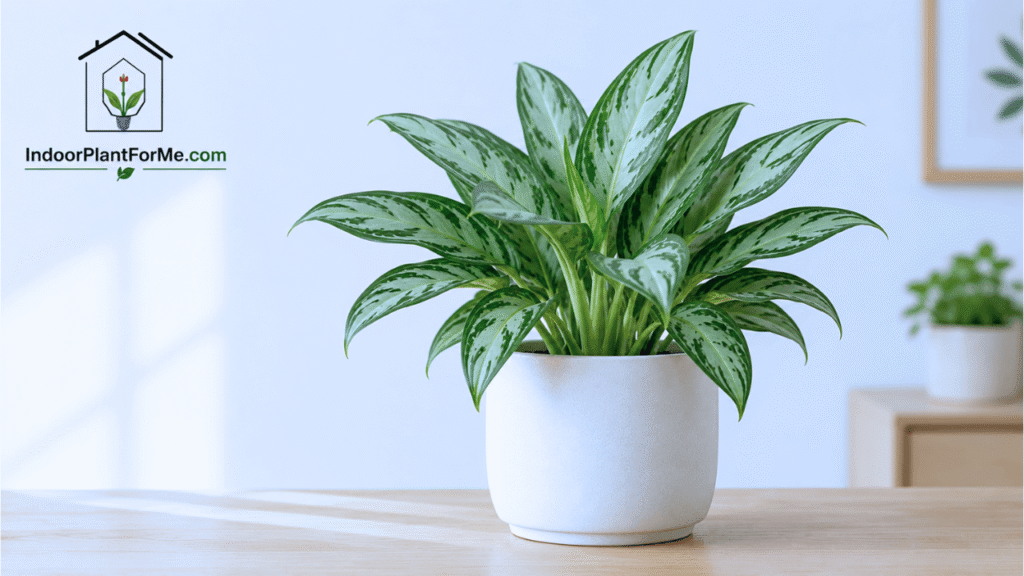
Beginner Confidence Rating: ⭐⭐⭐⭐⭐
If someone told me they had a room that never seems to get much sunlight, the Chinese Evergreen would be one of the very first plants I’d recommend.
It’s one of those plants that quietly gets on with life without demanding much attention.
Better yet, its beautiful patterned leaves add color to your home even when it’s not producing new growth.
If you’re worried that your apartment or office is “too dark for plants,” this one might surprise you.
Quick Care Card
| Feature | Recommendation |
| Difficulty | Very Easy |
| Light | Low to Medium Indirect Light |
| Water | When the top 2 inches (5 cm) of soil feel dry |
| Humidity | Average household humidity |
| Growth Speed | Slow to Moderate |
| Pet Safe | No |
| Best Room | Bedroom, Office, Living Room |
Why I Recommend It
One thing that catches many new plant owners off guard is that not every houseplant wants to sit in a bright sunny window all day.
The Chinese Evergreen is a great reminder of that.
I’ve found that many people actually do better with plants like this because they don’t spend their time worrying whether their home is “bright enough.”
As long as the room is comfortably lit during the day, this plant is usually quite happy.
That takes a lot of pressure off when you’re still learning.
Light Requirements
Bright, indirect light will encourage faster growth and more vibrant leaf colors.
However, if your living room, hallway, or home office doesn’t receive strong sunlight, don’t rule this plant out.
It adapts remarkably well to lower-light conditions.
Watering
Here’s something worth remembering:
The Chinese Evergreen prefers slightly dry soil over constantly wet soil.
Before watering, simply check the top couple of inches of soil with your finger.
If it still feels damp, leave it alone for another day or two.
That tiny habit can prevent one of the biggest causes of indoor plant failure.
Common Beginner Mistake
Many people assume yellow leaves automatically mean the plant needs more water.
Ironically, it’s often the opposite.
Overwatering is a far more common reason for yellow leaves than underwatering.
Always check the soil before reaching for the watering can.
Seasonal Tip
During winter, your Chinese Evergreen will probably slow down.
That’s completely normal.
It isn’t dying—it is simply growing more slowly because there’s less daylight.
Reduce watering slightly until spring arrives.
Signs Your Plant Is Happy
- Bright, colorful leaves
- Firm stems
- New leaves slowly unfurling
- Steady, healthy growth
Pro Tip
Every month or two, gently wipe dust from the leaves with a soft damp cloth.
Besides making the plant look better, clean leaves absorb light more efficiently.
6. Heartleaf Philodendron
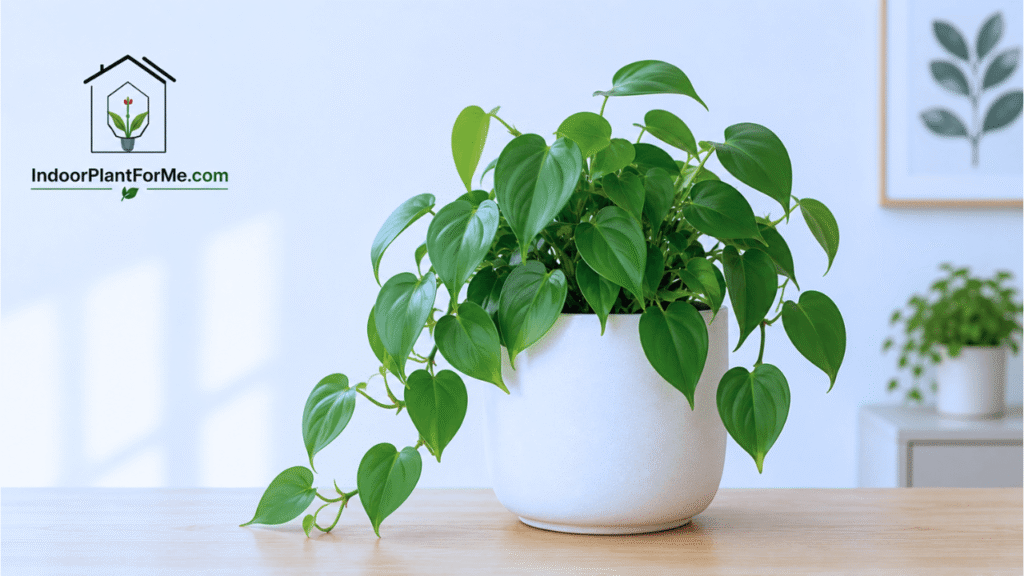
Beginner Confidence Rating: ⭐⭐⭐⭐⭐
Heartleaf Philodendron is one of those plants that seems to make every room feel more inviting.
Its soft, trailing vines can spill gracefully over bookshelves, hang from baskets, or climb a support pole if you prefer a taller display.
If you’ve admired those cozy homes filled with cascading green vines, there’s a good chance you’ve already seen one.
Quick Care Card
| Feature | Recommendation |
| Difficulty | Very Easy |
| Light | Medium to Bright Indirect Light |
| Water | When the top inch (2.5 cm) of soil feels dry |
| Humidity | Average household humidity |
| Growth Speed | Fast |
| Pet Safe | No |
| Best Room | Living Room, Home Office, Bedroom |
Why It’s Such a Great First Plant
One thing I really like about Heartleaf Philodendron is that it doesn’t expect perfection.
Miss a watering by a day or two?
It usually forgives you.
Need to trim it because it’s getting too long?
It responds by producing even more growth.
It’s the kind of plant that helps you feel successful instead of constantly worrying that you’re doing something wrong.
Light Requirements
If possible, place it near a bright window where sunlight is filtered through a curtain.
That gives it plenty of energy without exposing the leaves to harsh afternoon sun.
If your room isn’t especially bright, don’t worry too much.
It will still grow—it just might grow a little more slowly.
Watering
This is another plant where checking the soil is much better than following a calendar.
When the top inch (2.5 cm) feels dry, water thoroughly until excess water drains from the bottom of the pot.
Then simply let nature take over.
Beginner’s Corner
If you’re nervous about pruning your first plant, Heartleaf Philodendron is a wonderful place to learn.
Making a small trim often encourages fuller, bushier growth.
Think of it as giving the plant a haircut rather than hurting it.
Common Beginner Mistake
Putting it in a very dark corner because someone said it was a “low-light plant.”
While it survives there, it rarely looks its best.
A little extra natural light makes an enormous difference.
Seasonal Tip
Spring and summer are when this plant really comes alive.
Don’t be surprised if you notice new leaves appearing every couple of weeks.
That’s completely normal and one of the reasons it’s so rewarding to grow.
7. Cast Iron Plant (Aspidistra elatior)
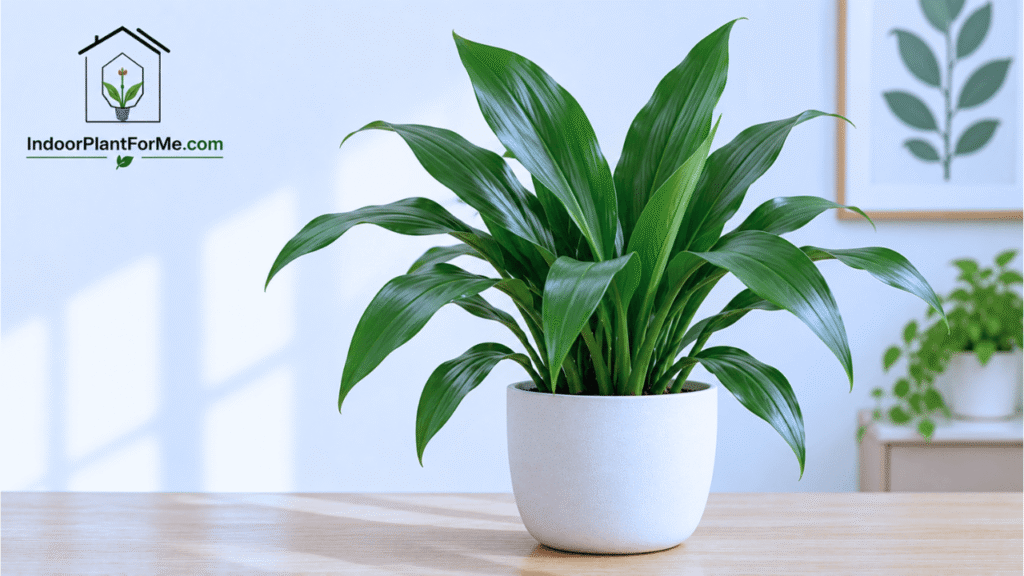
Beginner Confidence Rating: ⭐⭐⭐⭐⭐
If there were an award for patience, the Cast Iron Plant would probably win it every year.
It has earned its reputation by surviving conditions that would frustrate many other houseplants.
Low light?
No problem.
Busy schedule?
It understands.
Forgot to water it last week?
It’ll probably forgive you.
That’s exactly why it’s one of my favorite recommendations for people who are buying their very first indoor plant.
Quick Care Card
| Feature | Recommendation |
| Difficulty | Extremely Easy |
| Light | Low to Medium Indirect Light |
| Water | Every 2–3 weeks (check soil first) |
| Humidity | Average household humidity |
| Growth Speed | Slow |
| Pet Safe | Yes |
| Best Room | Hallway, Office, Bedroom, Living Room |
Why Beginners Love It
The Cast Iron Plant doesn’t grow quickly.
For some people, that might sound like a disadvantage.
Personally, I think it’s one of its biggest strengths.
A slow-growing plant gives you time to learn.
You’re not constantly wondering why it’s changing every week.
Instead, you get to enjoy steady, reliable growth without much effort.
Watering
If you’re ever unsure whether to water today or tomorrow…
Choose tomorrow.
This plant would much rather be slightly dry than sitting in soggy soil.
Seasonal Tip
Winter is often the toughest season for indoor plants because our homes become drier from indoor heating.
Fortunately, Cast Iron Plants handle dry indoor air much better than many tropical plants.
That’s another reason they’ve remained popular for generations.
Pro Tip
Don’t panic if your Cast Iron Plant seems to grow slowly.
Slow growth doesn’t mean poor health.
It’s simply the way this plant naturally grows—and one of the reasons it’s so wonderfully low-maintenance.
8. Parlor Palm (Chamaedorea elegans)
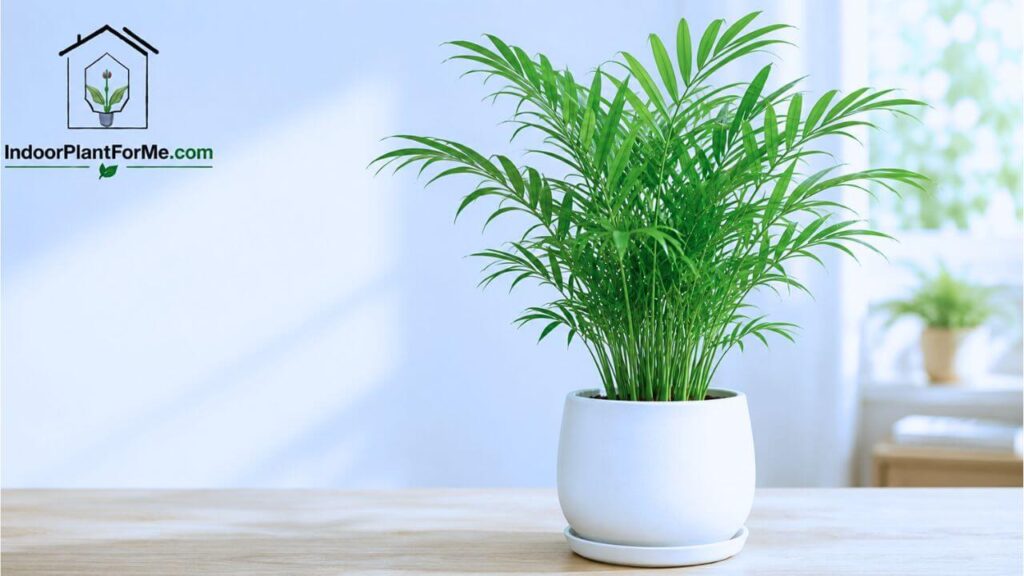
Beginner Confidence Rating: ⭐⭐⭐⭐☆
There’s something timeless about a Parlor Palm.
It doesn’t scream for attention the way some colorful houseplants do. Instead, it quietly adds a relaxed, tropical feel to a room.
Whether it’s sitting in a cozy reading corner, brightening up a home office, or softening the look of a living room, it has a way of making a space feel calmer.
If you’re looking for a plant that’s elegant without being demanding, this is a wonderful place to start.
Quick Care Card
| Feature | Recommendation |
| Difficulty | Easy |
| Light | Low to Bright Indirect Light |
| Water | When the top 1–2 inches (2.5–5 cm) of soil feel dry |
| Humidity | Average to Moderate |
| Growth Speed | Slow |
| Pet Safe | Yes |
| Best Room | Living Room, Bedroom, Home Office |
Why I Recommend It
One reason I often suggest the Parlor Palm to new plant owners is that it doesn’t expect perfect conditions.
Unlike many tropical plants, it doesn’t demand constant misting or high humidity.
If your home feels comfortable to you, chances are this palm will feel comfortable too.
That makes it much less intimidating than many people expect.
Light Requirements
The Parlor Palm is happiest in bright, indirect light, but it’s also one of the few palms that adapts well to lower-light rooms.
Just remember that “low light” doesn’t mean “no light.”
Every plant still needs natural daylight to survive.
Watering
A simple routine works best.
Check the soil every week.
If the top inch or two feels dry, water thoroughly until excess water drains from the bottom.
Then allow the soil to dry slightly before watering again.
Common Beginner Mistake
One mistake I see quite often is placing palms right beside heating vents or air conditioners.
The constantly moving hot or cold air dries the leaves and can cause brown tips.
Try to keep your plant in a spot where the temperature stays fairly consistent.
Seasonal Tip
During winter, your Parlor Palm may not produce many new leaves.
That’s perfectly normal.
Resist the temptation to water more often just because growth has slowed.
9. Dracaena
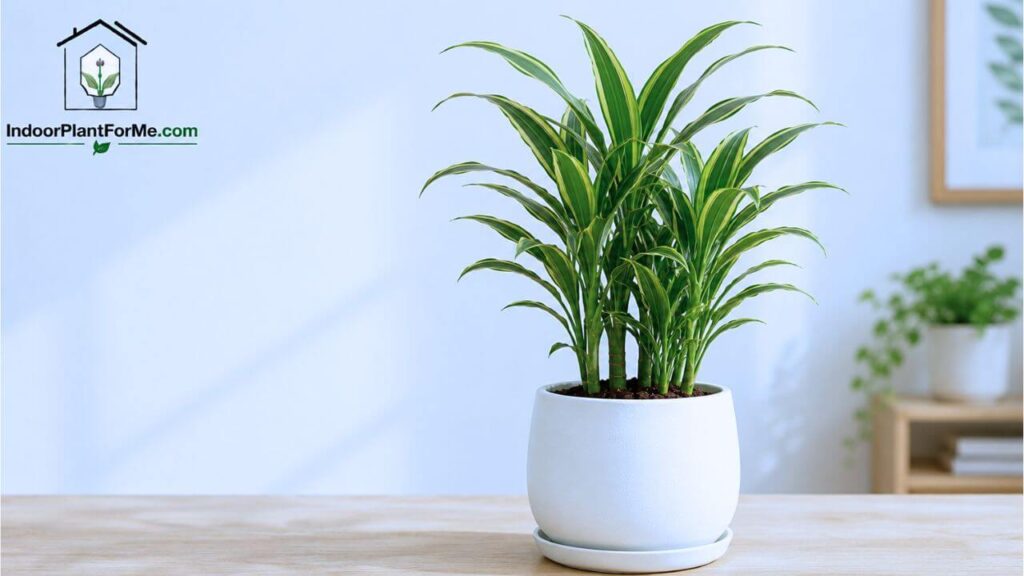
Beginner Confidence Rating: ⭐⭐⭐⭐☆
If you’re hoping to add height to a room without filling every corner with plants, Dracaena is an excellent choice.
Its upright growth makes it perfect beside sofas, entryways, or office desks, and many varieties have beautiful striped leaves that immediately catch your eye.
It’s one of those plants that looks far more expensive than it actually is.
Quick Care Card
| Feature | Recommendation |
| Difficulty | Easy |
| Light | Bright, Indirect Light |
| Water | Allow the top half of the soil to dry before watering |
| Humidity | Average household humidity |
| Growth Speed | Slow to Moderate |
| Pet Safe | No |
| Best Room | Living Room, Office |
Why It’s Beginner-Friendly
Dracaena doesn’t ask for much.
Give it decent light, avoid overwatering, and it’ll reward you with steady, dependable growth.
I especially like recommending it to people who want something a little taller than the average tabletop plant.
It creates visual interest without creating extra work.
Light Requirements
Bright, indirect light is ideal.
Too much direct afternoon sun may bleach or scorch the leaves.
If the room is a little darker, growth will simply slow down.
Watering
One thing worth knowing is that Dracaena likes to dry out a little between waterings.
If you’re someone who worries about watering too little, this plant might actually suit you quite well.
Common Beginner Mistake
Watering “just in case.”
It’s amazing how often plants struggle because we love them a little too much.
Whenever you’re unsure, check the soil first.
It only takes a few seconds.
Pro Tip
Some Dracaena varieties can be sensitive to fluoride naturally found in tap water.
If you notice brown leaf tips even though watering seems correct, try filtered or distilled water for a few weeks and see if the plant responds.
10. Peperomia
Beginner Confidence Rating: ⭐⭐⭐⭐☆
If you don’t have much space, don’t overlook Peperomia.
These compact little plants prove that you don’t need a large living room to enjoy indoor gardening.
They’re perfect for desks, bookshelves, coffee tables, kitchen counters, and even small apartments where every inch matters.
Best of all, there are hundreds of different varieties to choose from.
Quick Care Card
| Feature | Recommendation |
| Difficulty | Easy |
| Light | Bright, Indirect Light |
| Water | Allow half the soil to dry before watering |
| Humidity | Average household humidity |
| Growth Speed | Slow |
| Pet Safe | Many varieties are considered pet-friendly |
| Best Room | Office, Bedroom, Kitchen |
Why I Like It
Peperomia is one of those plants that quietly fits into almost any home.
Because it stays relatively compact, you don’t have to worry about it taking over your shelf or needing frequent repotting.
It’s an excellent choice if you’re still deciding whether indoor gardening is going to become a long-term hobby.
Watering
Peperomia stores a little moisture inside its thick leaves.
That means it can usually tolerate waiting an extra day or two before watering.
In my experience, beginners tend to do much better when they let Peperomia dry slightly instead of keeping the soil constantly damp.
Common Beginner Mistake
Choosing an oversized pot.
A pot that’s much larger than the root system holds excess moisture longer, increasing the risk of root rot.
A pot only slightly larger than the roots is usually the better choice.
Seasonal Tip
During spring and summer, you’ll often notice fresh leaves emerging regularly.
That’s the best time to feed with a balanced houseplant fertilizer following the manufacturer’s instructions.
11. Rubber Plant (Ficus elastica)
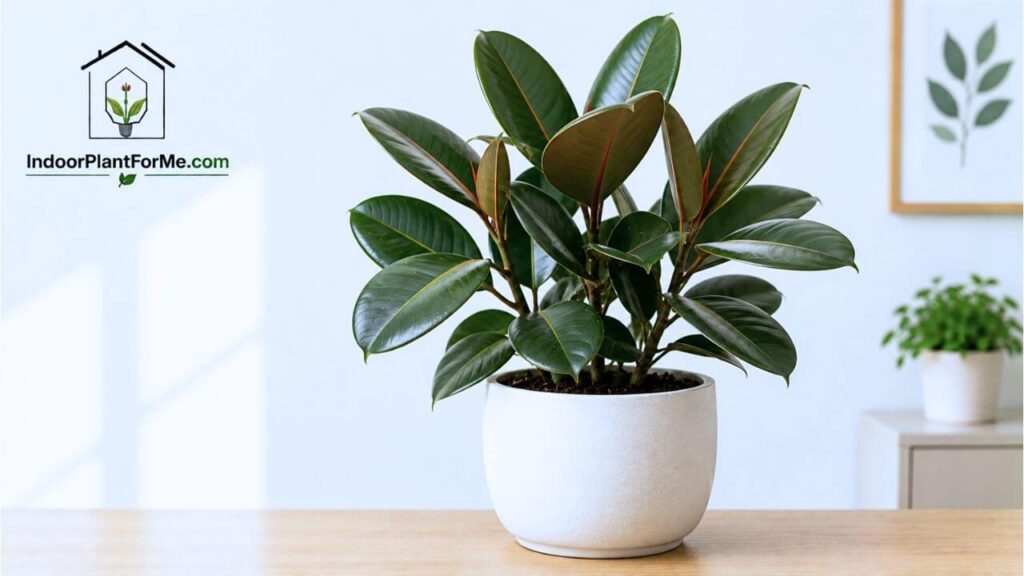
Beginner Confidence Rating: ⭐⭐⭐⭐☆
If your goal is to own a houseplant that makes a statement, the Rubber Plant deserves a place near the top of your list.
Its large, glossy leaves instantly make a room feel more vibrant and sophisticated.
Although it’s slightly more demanding than a Snake Plant or ZZ Plant, I still think it’s well within reach for someone buying their first or second houseplant.
Quick Care Card
| Feature | Recommendation |
| Difficulty | Easy |
| Light | Bright, Indirect Light |
| Water | Water when the top 2 inches (5 cm) of soil are dry |
| Humidity | Average to Moderate |
| Growth Speed | Moderate |
| Pet Safe | No |
| Best Room | Living Room, Entryway |
Why It’s Worth Considering
There’s something satisfying about watching a Rubber Plant mature.
With good care, each new leaf emerges wrapped inside a reddish sheath before slowly unfolding into a large, glossy leaf.
It’s one of those little moments that reminds you why indoor gardening can be so rewarding.
Beginner’s Corner
If this is one of your first plants, don’t worry if it drops a leaf after you bring it home.
Many houseplants need a little time to adjust to a new environment.
As long as you’re providing the right light and avoiding overwatering, the plant usually settles in within a few weeks.
Pro Tip
Every few weeks, wipe the large leaves with a damp cloth.
Not only does this keep the plant looking beautiful, but it also helps the leaves absorb light more effectively.
12. Aloe Vera
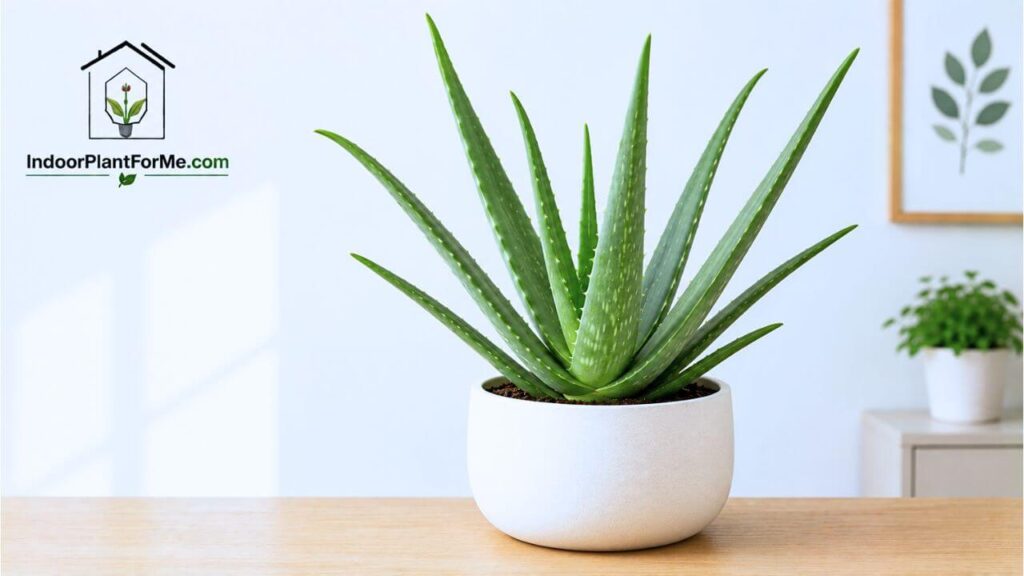
Beginner Confidence Rating: ⭐⭐⭐⭐☆
Let’s be honest—almost everyone has heard of Aloe Vera.
Most people know it as “that plant with the soothing gel inside,” but what often gets overlooked is that it’s also one of the easiest houseplants to grow.
If you’ve ever forgotten to water a plant (or two… or five… no judgment here), Aloe Vera might become your new best friend.
It doesn’t ask for much.
In fact, it actually prefers that you leave it alone more often than you fuss over it.
Sometimes the best thing you can do for an Aloe Vera is… absolutely nothing.
Quick Care Card
| Feature | Recommendation |
| Difficulty | Easy |
| Light | Bright, indirect light with a little direct morning sun |
| Water | Every 2–4 weeks (only after the soil is completely dry) |
| Humidity | Low to average |
| Growth Speed | Moderate |
| Pet Safe | No |
| Best Room | Kitchen, sunny office, living room |
Why I Love Recommending Aloe Vera
If you’re the kind of person who’s worried you’ll “love your plant to death,” Aloe Vera is here to save you from yourself.
Seriously.
One of the biggest surprises for new plant owners is discovering that many houseplants don’t need constant attention.
Aloe Vera is one of them.
It’s like that independent friend who appreciates you checking in… but definitely doesn’t need you texting every five minutes.
Light
A bright window is your Aloe Vera’s happy place.
An east-facing window is fantastic because it gets gentle morning sunshine.
A south- or west-facing window also works well if the afternoon sun isn’t too intense.
If the leaves begin stretching or leaning dramatically toward the window, your plant is politely asking for a little more light.
Watering
Here’s my favorite rule for Aloe Vera:
When you think it’s time to water… wait another couple of days and check again.
It sounds strange, but Aloe Vera stores water inside its thick leaves.
That means it’s prepared for dry spells.
Wet soil, on the other hand, is where trouble usually begins.
Oops… Don’t Do This
Please don’t give your Aloe Vera “just a little splash.”
Houseplants generally prefer a deep drink followed by time to dry out.
A tiny splash every few days only keeps the surface damp while the roots stay unhappy.
When you water, water thoroughly until excess water drains from the bottom.
Then let the soil dry completely before watering again.
Seasonal Reminder
During winter, your Aloe Vera is basically on vacation.
It won’t grow very much, and it certainly won’t need as much water.
That’s completely normal.
Don’t try to “wake it up” with extra watering.
Trust me—it’ll let you know when spring arrives.
Don’t Worry, This Is Normal
Older leaves near the bottom may eventually dry up and die.
Don’t panic.
Plants replace old leaves just like trees lose old ones.
As long as new healthy leaves continue to appear, you’re doing just fine.
13. Ponytail Palm (Beaucarnea recurvata)
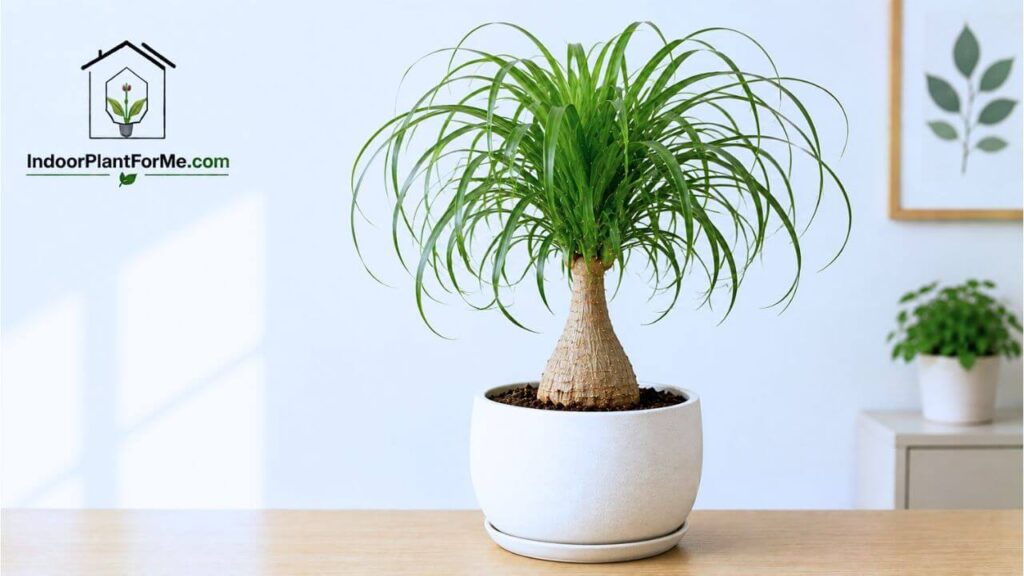
Beginner Confidence Rating: ⭐⭐⭐⭐☆
Can we clear up one thing first?
Despite the name…
The Ponytail Palm isn’t actually a palm.
I know.
Plants like to keep us humble.
Instead, it’s a succulent that stores water inside its thick, swollen trunk.
And honestly?
That makes it even easier to care for.
Quick Care Card
| Feature | Recommendation |
| Difficulty | Easy |
| Light | Bright light |
| Water | Every 3–4 weeks |
| Humidity | Low |
| Growth Speed | Slow |
| Pet Safe | Yes |
| Best Room | Living room, sunny apartment, office |
Why Beginners Fall in Love With It
It’s impossible not to smile when you see a Ponytail Palm.
Its long, curly leaves look like a fountain—or, as the name suggests, a ponytail having a really good hair day.
It’s quirky.
It’s fun.
And unlike that friend who constantly asks for favors…
this plant is wonderfully independent.
Watering
If there’s one plant that teaches patience, it’s this one.
Its swollen trunk works like a water tank.
That’s why watering every weekend simply isn’t necessary.
If the soil still feels damp, leave it alone.
Your Ponytail Palm is perfectly capable of waiting.
Little Trick That Makes a Big Difference
Turn the pot a quarter turn every couple of weeks.
Otherwise, you may notice the leaves leaning toward the nearest window like they’re trying to eavesdrop on the neighbors.
Common Beginner Mistake
Buying a decorative pot without drainage holes.
I know.
They’re beautiful.
They’re also responsible for quietly drowning a lot of perfectly healthy plants.
If you love decorative pots, keep the plant inside a plastic nursery pot and simply place that inside the decorative container.
Best of both worlds.
14. Bird’s Nest Fern (Asplenium nidus)
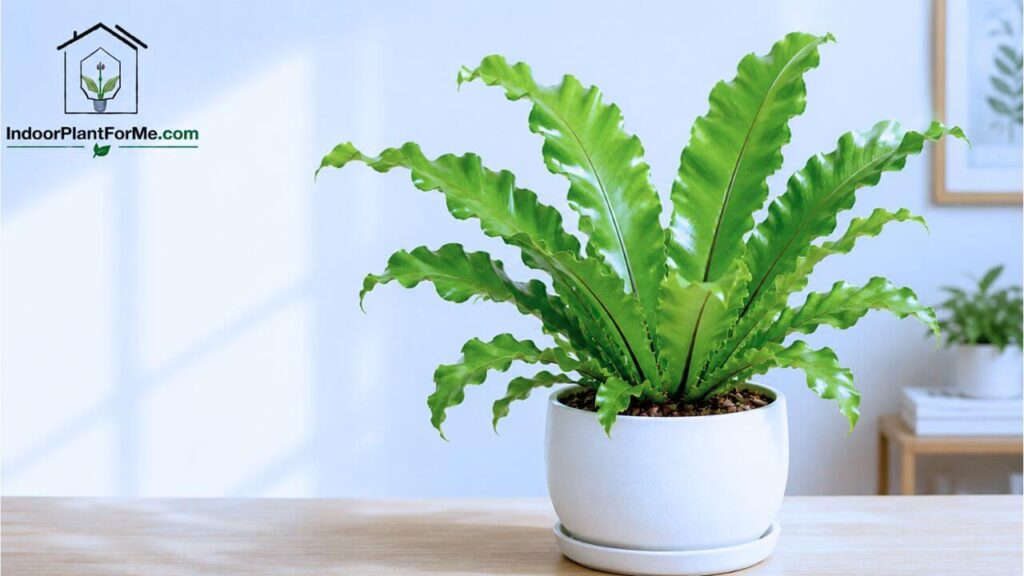
Beginner Confidence Rating: ⭐⭐⭐☆☆
I’ll be honest
Bird’s Nest Fern is probably the most “high-maintenance” plant on this list.
Now before you close the page
That doesn’t mean it’s difficult.
It just appreciates a little more consistency than the Snake Plant or ZZ Plant.
And once you understand what it likes, it’s actually very rewarding to grow.
Quick Care Card
| Feature | Recommendation |
| Difficulty | Moderate |
| Light | Medium to Bright Indirect Light |
| Water | Keep lightly moist |
| Humidity | Moderate to High |
| Growth Speed | Moderate |
| Pet Safe | Yes |
| Best Room | Bathroom, kitchen |
Why It’s Worth Trying
Those beautiful bright green leaves look almost tropical.
If you’ve been dreaming about creating a little indoor jungle, Bird’s Nest Fern helps create that look almost instantly.
Here’s the Secret
Most people don’t kill Bird’s Nest Ferns because they forget to water them.
They accidentally water them the wrong way.
The center of the plant—the part where all the new leaves emerge—should stay relatively dry.
Instead, water around the soil.
Think of it like watering the roots, not giving the plant a shower directly on its head.
Don’t Worry, This Is Normal
New leaves often emerge tightly rolled up.
Don’t try to help them unfold.
Nature has already figured that part out.
15. Christmas Cactus (Schlumbergera)
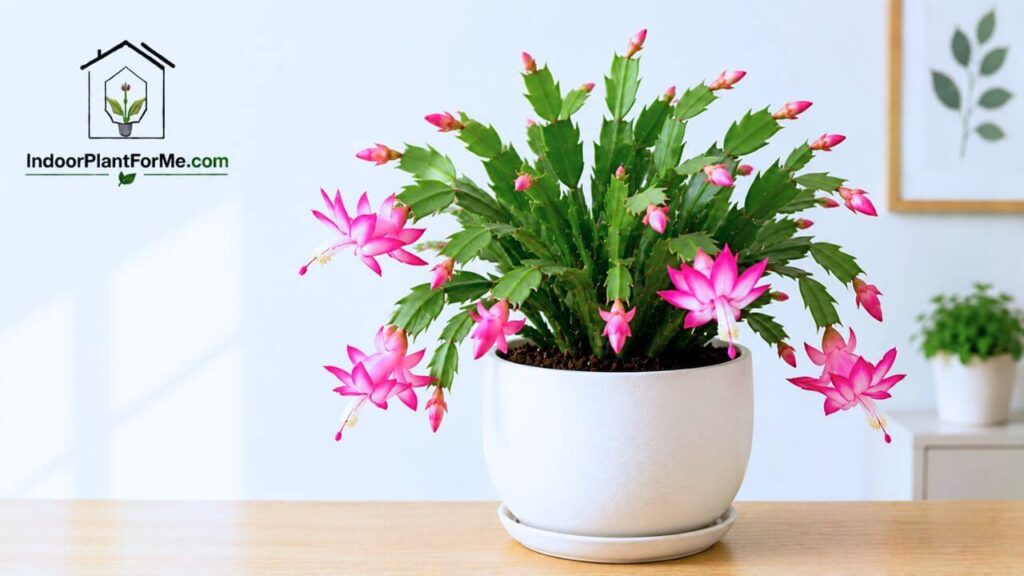
Beginner Confidence Rating: ⭐⭐⭐⭐☆
Here’s a fun fact that surprises a lot of people…
Christmas Cactus isn’t a desert cactus.
It’s actually native to tropical rainforests.
I know…
The plant world loves keeping us on our toes.
That also explains why it enjoys a little more moisture than most people expect.
Quick Care Card
| Feature | Recommendation |
| Difficulty | Easy |
| Light | Bright, indirect light |
| Water | Water when the top inch (2.5 cm) becomes dry |
| Humidity | Average |
| Growth Speed | Moderate |
| Pet Safe | Yes |
| Best Room | Living room, dining room |
Why It’s Such a Fun Plant
Most houseplants are admired for their leaves.
Christmas Cactus gives you something extra.
Flowers.
And when those colorful blooms appear during late fall or winter, they feel like a little reward for your patience.
It’s one of those plants that makes visitors ask,
“Wait… your cactus flowers?”
Seasonal Reminder
If you’re hoping for flowers around the holidays, your plant needs longer nights and slightly cooler temperatures during fall.
Mother Nature does most of the work—you just have to avoid disturbing the routine.
Plant Parent Truth
Don’t move your Christmas Cactus all over the house once buds begin to form.
Plants can be surprisingly dramatic.
Move them too much and they may decide, “Actually… I’m not blooming after all.”
Sometimes they’re just like toddlers who skipped their afternoon nap.
Which Plant Should You Choose?
If you’ve made it this far, you might be wondering,
“Okay… but which one should I actually buy?”
Here’s my advice. Don’t overthink it.
You don’t need the “perfect” plant. You just need your first successful plant.
If you want my recommendations:
Best Overall: Snake Plant
Best for Busy People: ZZ Plant
Best Hanging Plant: Golden Pothos
Best for Pet Owners: Spider Plant
Best for Apartments: Chinese Evergreen
Best Statement Plant: Rubber Plant
Best Forgetful-Person Plant: Ponytail Palm
Because here’s the truth,
Your first successful plant is the one that teaches you confidence.
Once you’ve kept one plant healthy for a few months, you’ll be amazed how quickly the second and third become easier.
And before you know it,
You’ll be walking into a garden center saying,
“I’m only here for potting soil.”
Then somehow leaving with three new plants.
Don’t worry.
It happens to the best of us.
Comparing the 15 Best Indoor Plants for Beginners
I know this has been a lot of information, so let’s make your decision a little easier.
Here’s a side-by-side comparison of every plant we’ve covered.
| Plant | Difficulty | Light | Water Needs | Pet Friendly | Best For |
| Snake Plant | ⭐⭐⭐⭐⭐ | Low to Bright Indirect | Very Low | ❌ | Almost everyone |
| ZZ Plant | ⭐⭐⭐⭐⭐ | Low to Bright Indirect | Very Low | ❌ | Busy people |
| Golden Pothos | ⭐⭐⭐⭐⭐ | Medium to Bright Indirect | Moderate | ❌ | Hanging baskets |
| Spider Plant | ⭐⭐⭐⭐☆ | Bright Indirect | Moderate | ✅ | Homes with pets |
| Chinese Evergreen | ⭐⭐⭐⭐⭐ | Low to Medium | Low | ❌ | Apartments |
| Heartleaf Philodendron | ⭐⭐⭐⭐⭐ | Medium to Bright | Moderate | ❌ | Shelves & hanging planters |
| Cast Iron Plant | ⭐⭐⭐⭐⭐ | Low Light | Low | ✅ | Forgetful beginners |
| Parlor Palm | ⭐⭐⭐⭐☆ | Low to Bright Indirect | Moderate | ✅ | Tropical décor |
| Dracaena | ⭐⭐⭐⭐☆ | Bright Indirect | Moderate | ❌ | Living rooms |
| Peperomia | ⭐⭐⭐⭐☆ | Bright Indirect | Low | Many varieties | Small spaces |
| Rubber Plant | ⭐⭐⭐⭐☆ | Bright Indirect | Moderate | ❌ | Statement plant |
| Aloe Vera | ⭐⭐⭐⭐☆ | Bright | Low | ❌ | Sunny windows |
| Ponytail Palm | ⭐⭐⭐⭐☆ | Bright | Very Low | ✅ | Busy households |
| Bird’s Nest Fern | ⭐⭐⭐☆☆ | Medium Indirect | Moderate | ✅ | Bathrooms |
| Christmas Cactus | ⭐⭐⭐⭐☆ | Bright Indirect | Moderate | ✅ | Holiday blooms |
If you’re still undecided, here’s my simple advice:
If this is your very first houseplant, buy a Snake Plant or ZZ Plant.
They’re incredibly forgiving, and they’ll help you build confidence without making you feel like every little mistake is a disaster.
Remember, you’re not trying to become an expert overnight—you just need your first success.
The 7 Biggest Mistakes New Plant Parents Make
Can I let you in on a little secret?
Most houseplants don’t die because people don’t care.
They die because people care too much.
I’ve lost count of how many times someone has proudly said,
“I water it every single day!”
…and that’s exactly the problem.
Here are the mistakes I see most often.
1. Watering on a Schedule Instead of Checking the Soil
Plants don’t know it’s Saturday.
Some weeks they’ll need water sooner.
Other weeks they’ll still be perfectly happy.
The soil will always tell you the truth.
Your calendar won’t.
2. Buying a Plant Before Checking Your Light
This is a bit like buying a husky when you live in a tiny apartment and hate going outside.
The plant isn’t the problem.
It’s just in the wrong environment.
Spend five minutes figuring out how much natural light your room gets before buying a plant.
Future you will be very grateful.
3. Loving Your Plant with a Watering Can
This one deserves repeating.
Overwatering is probably the number one reason beginners lose houseplants.
Ironically, watering less often usually produces healthier plants.
It’s one of those rare situations where doing less actually gives you better results.
4. Ignoring Drainage
A beautiful decorative pot without drainage holes is a bit like wearing rain boots with no way for the water to get back out.
Eventually, things get soggy.
Whenever possible, keep your plant in a nursery pot with drainage holes and place that inside your decorative planter.
You’ll get the best of both worlds.
5. Moving Your Plant Every Few Days
I get it.
You’re trying to find the “perfect” spot.
But plants appreciate consistency.
If you’ve found a location with suitable light, give your plant a couple of weeks before deciding it isn’t happy.
Think of it like moving into a new house.
You’d probably want a little time to settle in too.
6. Expecting Instant Growth
This one catches a lot of people by surprise.
Houseplants aren’t in a race.
Some grow quickly.
Others seem to spend weeks quietly doing… well… not much.
That doesn’t mean they’re unhappy.
Sometimes they’re busy growing roots before putting out new leaves.
Patience is part of indoor gardening.
7. Thinking Every Brown Leaf Means Disaster
Here’s some good news.
Plants aren’t meant to look perfect forever.
An older leaf turning yellow or brown every now and then is completely normal.
It’s when you notice several leaves changing quickly that it’s worth investigating.
One imperfect leaf isn’t a reason to panic.
Caring for Indoor Plants Through the Seasons
One thing I wish more care guides talked about is that your plant’s needs change throughout the year.
If you treat July and January exactly the same, your plant probably won’t thank you for it.
Here’s a simple seasonal guide.
Spring
Spring is when most houseplants wake up from their winter slowdown.
This is the perfect time to:
- Repot root-bound plants.
- Start fertilizing again.
- Prune leggy growth.
- Expect lots of fresh new leaves.
Honestly, spring is the most exciting season to be a plant parent.
Everything suddenly starts growing again.
Summer
Summer is usually the busiest growing season.
You’ll probably notice the soil drying out more quickly.
Instead of automatically watering more often, simply check the soil every few days.
Also, don’t forget to rotate your plants every week or two.
Otherwise they’ll all start leaning toward the nearest window like they’re trying to watch what’s happening outside.
Fall
As the days become shorter, most houseplants naturally slow down.
This is your reminder to ease off the fertilizer and begin watering a little less frequently.
Don’t worry if your plant seems quieter.
It’s doing exactly what it’s supposed to do.
Winter
Winter is when many beginners accidentally overwater their plants.
Growth slows dramatically.
Less growth means less water.
Keep plants away from cold drafts, fireplaces, and heating vents whenever possible.
If you live in a northern state where winter days are especially short, a grow light can make a noticeable difference for plants that love brighter conditions.
Frequently Asked Questions
Final Thoughts
If there’s one thing I hope you take away from this guide, it’s this:
You don’t need to be born with a “green thumb” to grow healthy indoor plants.
Nobody starts out knowing exactly how much water a Snake Plant needs or where the perfect sunny window is.
We all learn one plant at a time.
If you’re just getting started, don’t feel like you need to buy five plants today.
Start with one. Learn how it responds to your home.
Notice how quickly the soil dries, how the leaves look after watering, and how much light it enjoys.
Those little observations will teach you more than any care guide ever could.
And if you make a mistake? Welcome to the club.
Every experienced plant lover has looked at a struggling plant and thought,
“Well… that didn’t go quite as planned.” The difference is that they didn’t give up.
Neither should you. So pick a plant that suits your home, give it a little patience, and enjoy the process.
Who knows? A year from now, you might be the friend everyone calls when they need help keeping their plants alive.
And don’t say I didn’t warn you…
Indoor plants have a funny way of multiplying. You start with one.
Then somehow your windowsill is full, your shelves have turned into miniature jungles, and you’re trying to convince yourself that there is definitely room for “just one more.”
Happy growing!
15 Best Indoor Plants for Beginners (Easy-Care Houseplants That Are Hard to Kill)
Quick Answer If you’re looking for the best indoor plants for beginners, start with plants…
The Truth About Can I Repot Indoor Plants in Winter (And How to Do It Right)
Can you repot indoor plants in winter? Yes, with the proper precautions. Repotting houseplants is…
How to Treat Botrytis Blight on Roses: A Comprehensive Guide
Treating Botrytis Blight on roses requires maintaining good garden hygiene and promptly removing any potential…
Should I Cut Brown Spots Off Fiddle Leaf Fig: A Complete Guide to Pruning Your Precious Plant
Yes, you can cut brown spots off a fiddle leaf fig, using the complete guide…
Can You Drown Mealybugs? Effective Strategies for Pest Control
Yes, you can drown mealybugs. It is one of the Effective Strategies for Pest Control. The…

How Fast Do Jade Plants Grow? A Comprehensive Guide
Would you like to know how fast do jade plants grow? Generally, young jade plants…